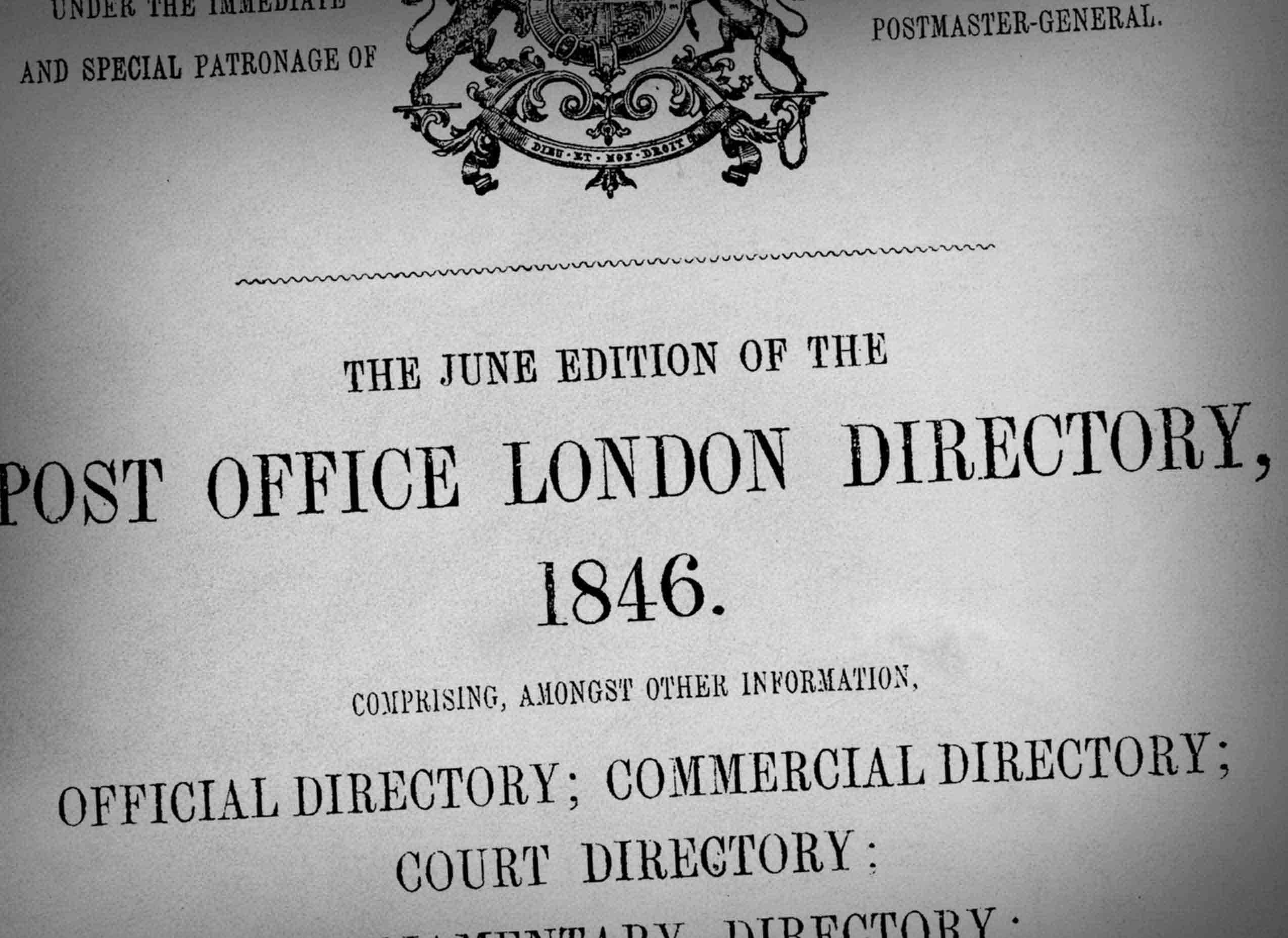
Directories have been produced for well over 300 years and can prove to be an invaluable source of information about local communities. As well as information about individuals, they also provide a wealth of general background information. For the periods before the census was available, they provide a snapshot of communities and their inhabitants, and the later ones are extremely useful tools for locating ancestors in the census.
Directory Publishers
Pigot & Slater
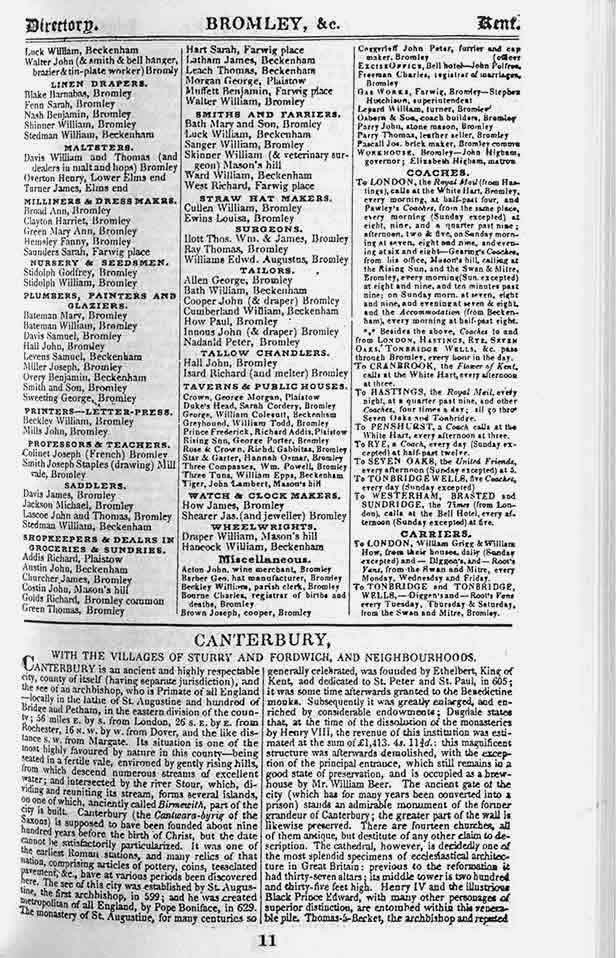
Pigot directories (from 1820) and Slater (1850s) cover major professions, nobility, and trades with names and addresses.
Kelly's Directories
Detailed gazetteer-style histories of towns and villages, chief landowners, and resident lists.
Watkins & Bulmer
Watkins offers street-by-street resident views in London, while Bulmer focus on extensive local histories.
Post Office
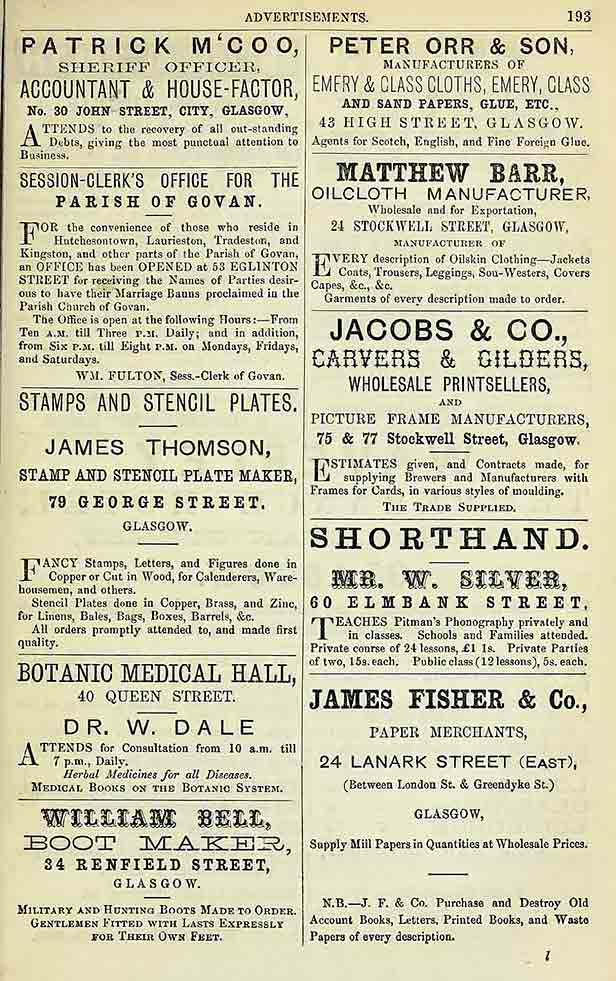
Provided fairly complete listings for residents and tradespeople throughout the 1900s.
Historical Context
Pigot directories start around 1820 and cover the major professions, nobility, gentry, clergy, coach and carrier services, Taverns and Public houses of the areas. Entries include the name, trade and address.
In Kelly's directories there are sections on each major town and surrounding villages, with a history of the area in a great deal of detail as you would find in a gazetteer. Information on the main trades, the chief land owners, the type of soil and even the coverage dates of parish registers can also appear. Residents will also be listed and the directories from 1890 onwards contain more residents, which are sometimes put in a section called Court Directory.
Tips and Things to Remember
- Consider spelling variants, wrong names and ages, and the possibility that some people were not recorded.
Searching a Directory
You should first try S&N Genealogy Supplies, as they have one of the largest highest-quality selections of directories available to download or on CD.
Also try The Genealogist – there are a number of directories that are available to search online.